There is a question almost nobody asks before booking a commercial small game shooting day: what does the land look like on a map? Not the photos of the bag, not the number of guns, not the price. The map. Because that is where everything is decided, often before the first dog is even released.
What follows is not a sales pitch. It is a reading grid for a shooter comparing offers who wants to avoid the disappointment of land that is nicely dressed but badly built.
What “commercial shooting” really means
Commercial small game shooting covers very different realities. At one end: pheasants released that same morning on a rented parcel, a drive dispatched in two hours, a bag artificially inflated. At the other: an estate managed over several years, with grey partridge or hare populations that come from multi-year management of the habitat, where shooting pressure is calibrated so as not to exhaust the capital.
The distinction does not lie in the advertised price. It lies in the land. An estate can charge a lot and offer nothing but consumption shooting. Another can charge comparable rates and offer a day that resembles what shooting was before the land consolidation of the 1970s flattened the hedges.
The deciding criterion is neither the list of species nor the number of cartridges allowed. It is the coherence of the land: its surface, its geographical continuity and the quality of the cover it offers game throughout the year, not just on the day.
Fragmented land: the invisible flaw that ruins a day
Fragmented land is an assembly of parcels rented from several different owners. On paper, the total area may look respectable. Three hundred hectares, they announce. But those three hundred hectares are split into six or eight islands separated by roads, private property outside the lease or crops belonging to a neighbour who has not signed.
The consequences are concrete. Beaters have to walk round. Dogs stop at the boundaries. The game does not stop: it passes to the other side and disappears into an area that cannot be driven. The drive loses its spatial logic. You spend as much time managing discontinuities as shooting.
There is worse. Fragmented land prevents any coherent long-term management of game. Grey partridge populations in particular need a stable habitat over several seasons to rebuild after shooting pressure. If parcels change from one year to the next with lease renewals, multi-year management becomes impossible. You start from zero each autumn and release to compensate.
An estate in one block: what that changes in practice
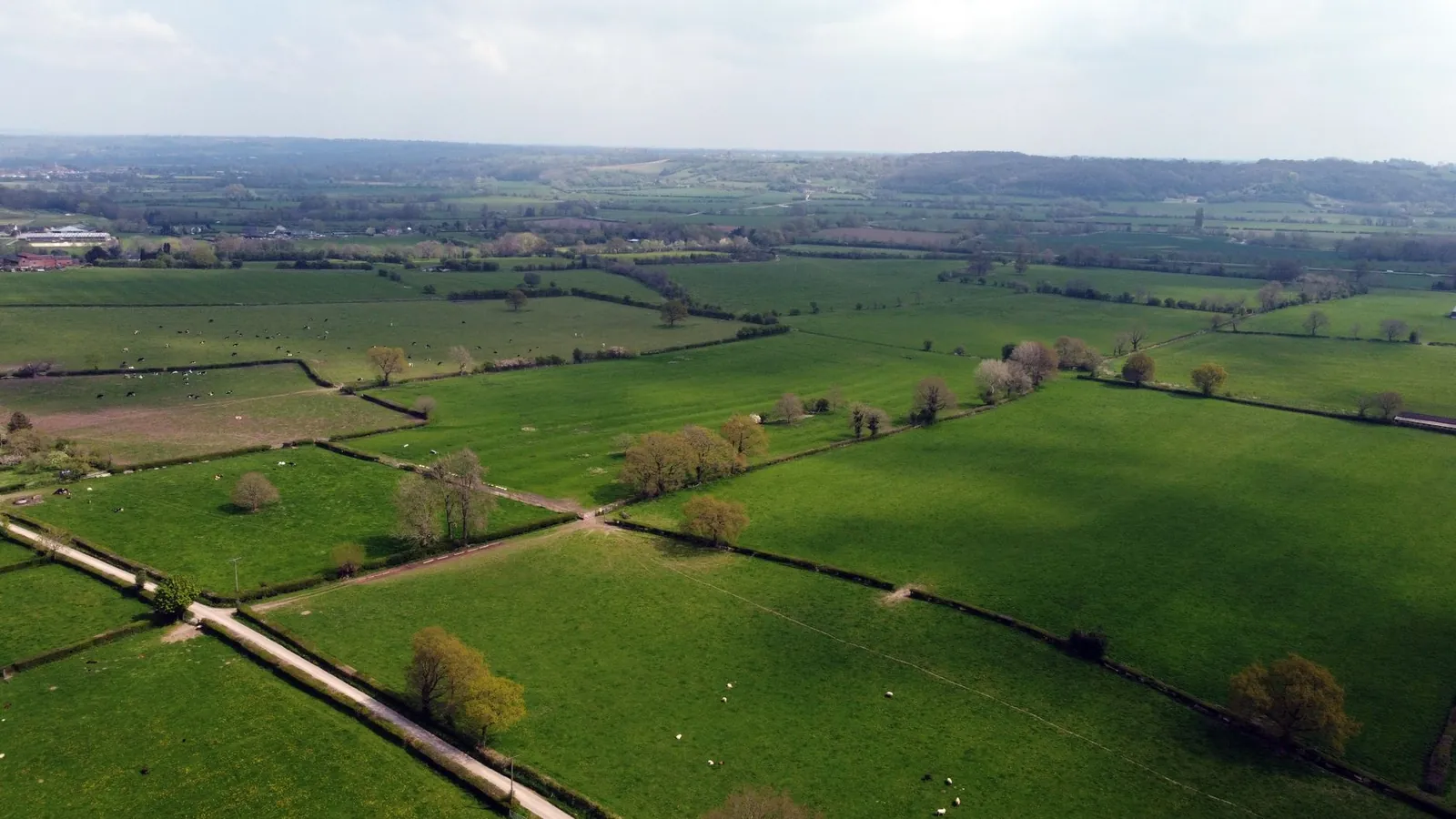
The idea of “one block” is simple: all the parcels touch. No enclave, no break. You can cross the estate from north to south without leaving the land. For the game, it is continuity of habitat. For the guns, it is a logic of shooting that can unfold without contortions.
On 1,100 hectares in one block, a drive line can cover a quarter of the estate in a morning. The dogs work freely. The natural corridors between woodland and crops guide the game towards the pegs without the guns having to improvise. The day has an architecture. It begins somewhere and ends somewhere else, with coherence in space.
This is also what multi-year management allows. When the land does not move, you can observe populations, adjust shooting pressure by sector, and leave some areas as reserve for a season to let them recover. This logic is impossible on land hastily assembled from one-year leases.
To see the effects on a day of driven shooting, the difference from fragmented land shows from the first hour: the dogs do not stop, the pegs are logical and the game moves along the corridors planned for it, not despite them.
The Bourbonnais bocage as natural habitat for small game
The Bourbonnais, and more precisely the Allier département, has kept a bocage that many French regions lost between 1965 and 1985. Hawthorn hedges, grass strips between fields and woodland, small ponds at the tail of woods: these are structures that the grey partridge and the European hare naturally use for nesting, feeding and sheltering from the wind.
This is not an aesthetic quality. It is a direct ecological function. A structured bocage reduces predation, provides insects for partridge chicks in spring and maintains a soil moisture that favours the low vegetation where the hare lies. Bare land, however vast, does not replace these structures.
The Tronçais forest, a few kilometres away, plays a complementary role here. It forms a forest reservoir that generates active edges, transit and feeding zones for the lowland game that comes to shelter there at night. The largest oak forest in Europe is not just a natural heritage to visit: it is a structuring element for the game populations of the surrounding land.
An estate that relies on these natural elements does not need mass releases to post a bag. Game density comes from the habitat itself, maintained over several generations.
How to assess land before you book?
A few precise questions are enough to separate serious offers from the others.
First, the real area in one block. Not the total area of the “territory” but the largest continuous parcel without a break. If the answer is vague, the answer is not good.
Next, how long the same operator has managed the land. Under three years, multi-year management does not yet exist. You shoot on what is there, not on what has been built.
The share of releases in the bag. An estate that practises natural management can tell you roughly what percentage of the bag comes from animals born on site. This figure distinguishes habitat shooting from consumption shooting.
The nature of the cover. Bocage hedges, wildlife fallows, flower strips between crops and woodland: these elements are visible on the aerial photographs available online. Bare land with a few curtains of maize planted for the occasion does not produce the same shooting.
Finally, annual shooting pressure. How many days on this land each season? An estate of 1,100 hectares that organises twenty days a year is not managed in the same way as the same estate that organises six.
To organise a day’s shooting of small game on coherent land and to visit the details of the Le Creux estate, the dedicated page gathers the information you need to assess the offer for yourself.
