
The Château du Creux is a classical 18th-century house, enlarged and given its setting in the 1770s by Nicolas-Martial Foacier, architect to the King at Versailles. Held by the same family line since the 14th century, it has been listed as a Historic Monument since 1950.
At Vallon-en-Sully, in the Allier, the Château du Creux occupies an estate along the Aumance, on the edge of the historic Bourbonnais. The lordship of Le Creux is first recorded in writing on 29 December 1407, when Hélion de La Faye paid homage to the Duke of Bourbon for his fortified house; it passed to the Fougières family in 1519 through the marriage of Jeanne de La Faye and Gilbert de Fougières. The château, most likely built in the first half of the 18th century, was enlarged in the 1770s by Nicolas-Martial Foacier, architect to the King at Versailles, who surrounded it with pavilions and a succession of courtyards. The pediment crowning the façade was added later, between 1883 and 1889, by Edmond Duthoit. In 1837, a new marriage passed the estate to the House of Nicolay, who have lived there ever since, without interruption.
The château has never ceased to be a family residence. People live here and receive guests here; it is not visited like a museum château with roped-off rooms. The present owners share part of the house with their guests, in guest rooms or for occasional private receptions, while continuing to live there all year round. This balance between private life and hospitality shapes every aspect of the place: some rooms remain reserved for the family, others open according to the chosen formula. The château was listed as a Historic Monument by order of 26 January 1950, the interior staircase and its balustrade included (Mérimée record PA00093327).
The château can be discovered in three distinct ways, which never overlap. In the guest rooms, for a stay of one night or a few, the owners welcome their guests in the rooms and suites of the Maison du Régisseur, breakfast included, with access to part of the park and, depending on availability, to the château itself. For private hire, for a wedding, a corporate retreat or a private reception, the estate closes to any other activity for the duration of the event: one event at a time, never two receptions in the same week. Finally, on occasional open days, during the European Heritage Days or openings arranged case by case, the public can discover some rooms that are usually closed, without calling into question the private character of the rest of the house.
These three formulas cannot be combined. A private hire does not automatically include access to the rooms reserved for the family; a night in a guest room does not mean the estate is privately hired.
The Château du Creux is at Vallon-en-Sully, a commune of the Allier (03190), at the heart of the Bourbonnais, halfway between Paris and the Massif Central. The estate borders the Aumance, a river that runs along the north side of the park, in bocage countryside typical of the region: woods, meadows and fields alternate. From Paris, allow a little under three hours by road; from Lyon, a similar time, which places the estate in a fairly central position for guests coming from several regions. The most convenient station and route are given at the time of booking, for a stay in a guest room as for a private hire. The immediate surroundings, between the Tronçais forest and the Aumance valley, lend themselves to a walk or an outing alongside a stay at the château.
Each of the following pages covers one aspect of the estate: the full chronology of its inheritance, the architectural vocabulary of the château and Foacier’s work, the layout of the park and gardens, and the genealogy of the family who live there today.
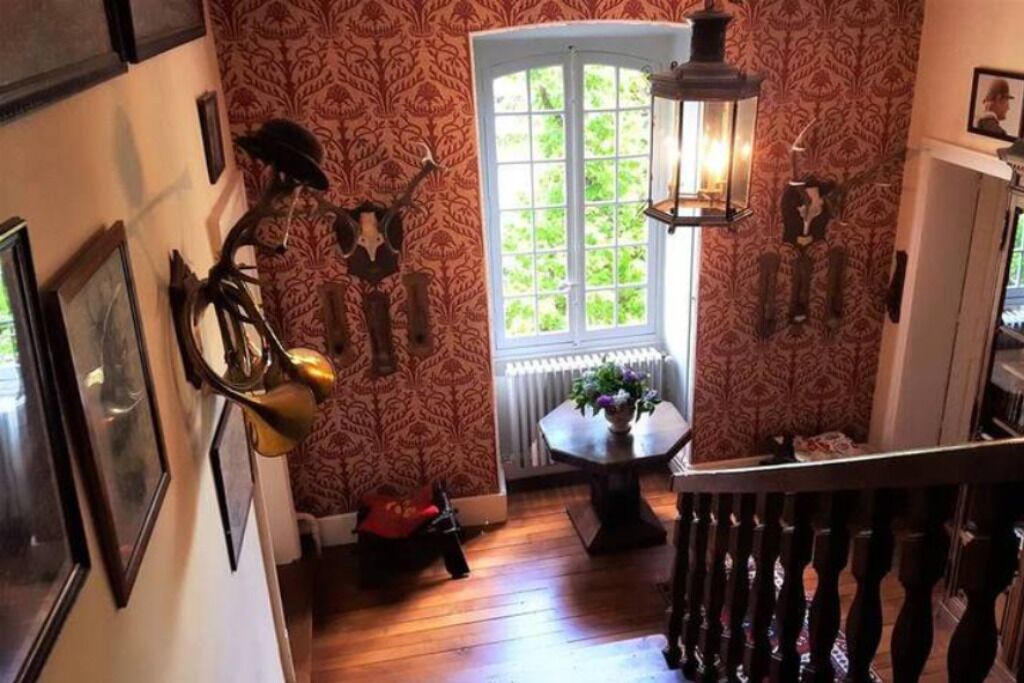
Seven centuries of family inheritance, from the La Faye fortified house, recorded in 1407, to the classical house enlarged by Foacier in the 1770s.
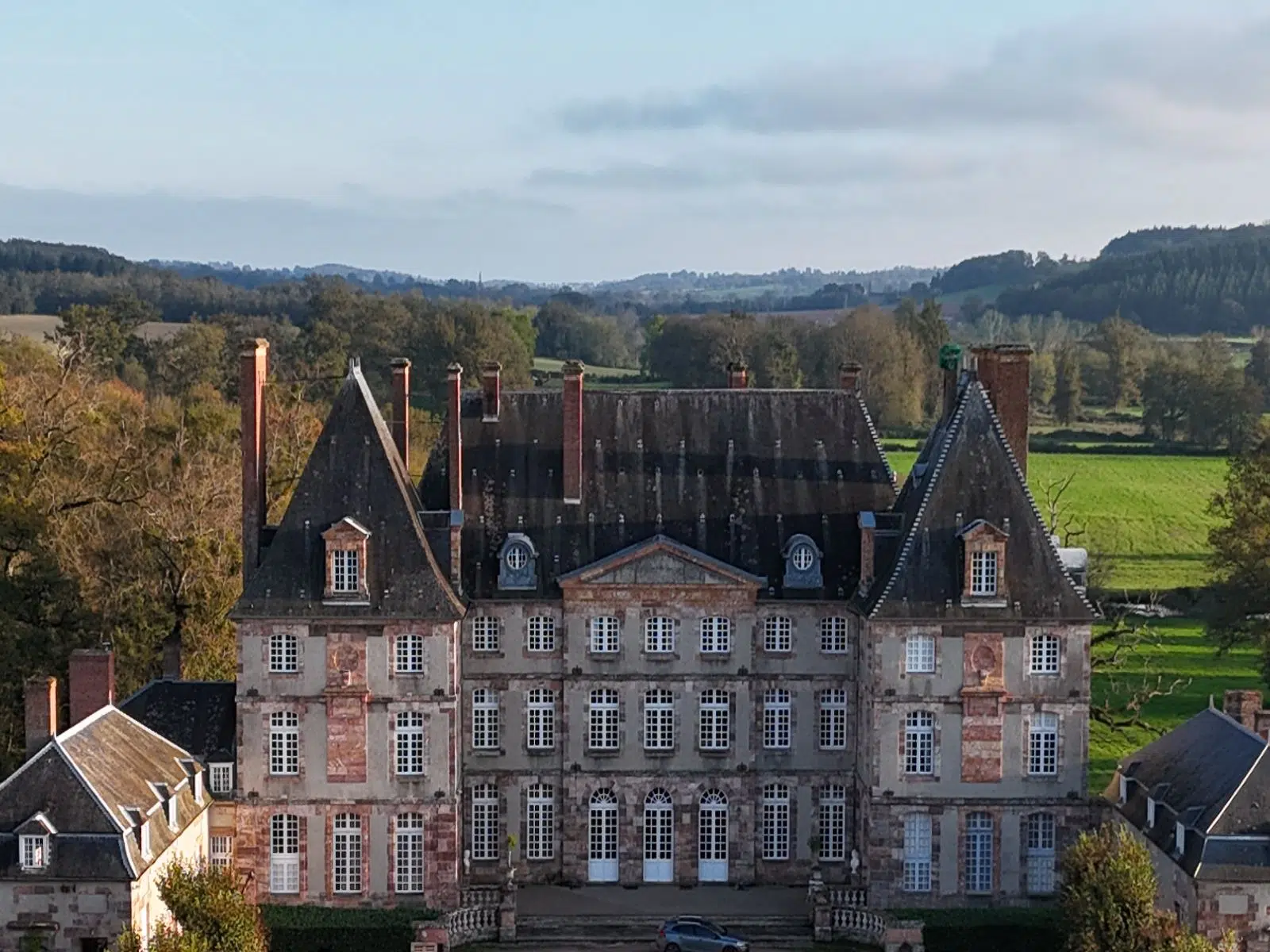
A classical 18th-century main house, the courtyards and pavilions designed by Nicolas-Martial Foacier, architect to the King, and the pediment added by Edmond Duthoit at the end of the 19th century.
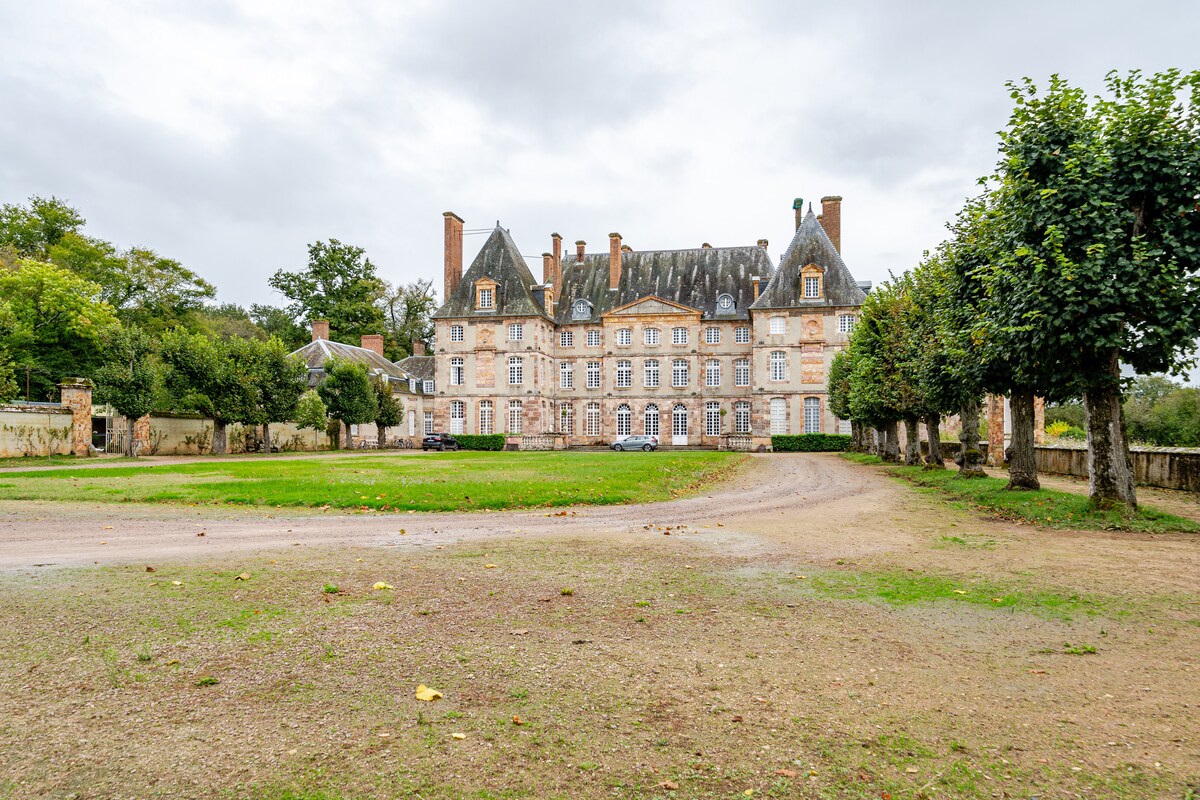
An English-style park along the Aumance, a walled kitchen garden still in cultivation and a court of honour that sets the approach to the château.
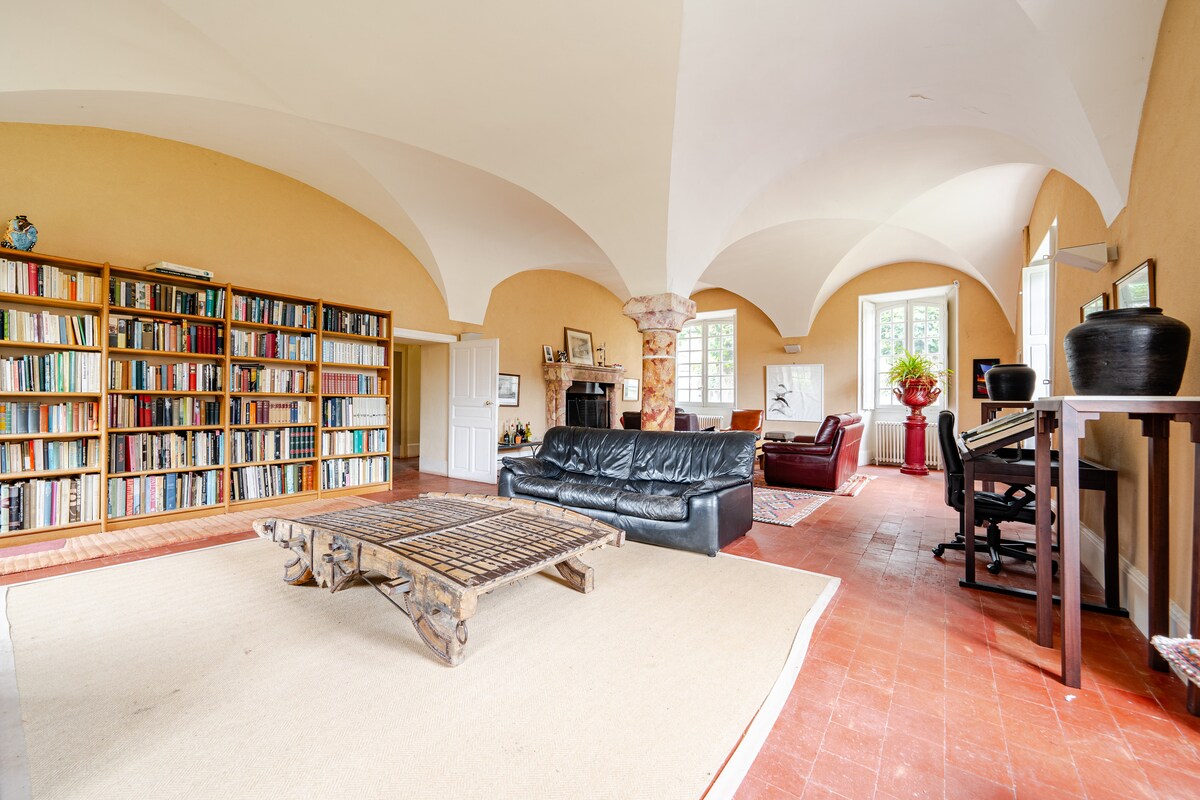
A line handed down since the 14th century: La Faye, Fougières, then the House of Nicolay, who have lived in the château since 1837.
Seasonal news from the Château, a few times a year.