It is 7:50. The courtyard is still in shadow. The first cars arrive, dogs fidget in the boots, someone holds a strong coffee he has not had time to finish. November in the Bourbonnais has that cold blue light that turns the château’s stones almost grey. It is exactly in that moment, before the day has even begun, that you understand why a day’s pheasant shooting on a private estate in one block is a different matter from a club shoot.
What follows is the precise course of a typical day at the Château du Creux. Not a promise. A fact.
Arriving at the estate: 8 am, the château still in the mist
The meeting time is 8 am at the château. Not “from 8”. At 8. The keeper is already there. The guns are set down under the courtyard canopy, the bags propped against the tufa wall. A thermos of coffee goes round. Two or three dogs circle their owners on leads.
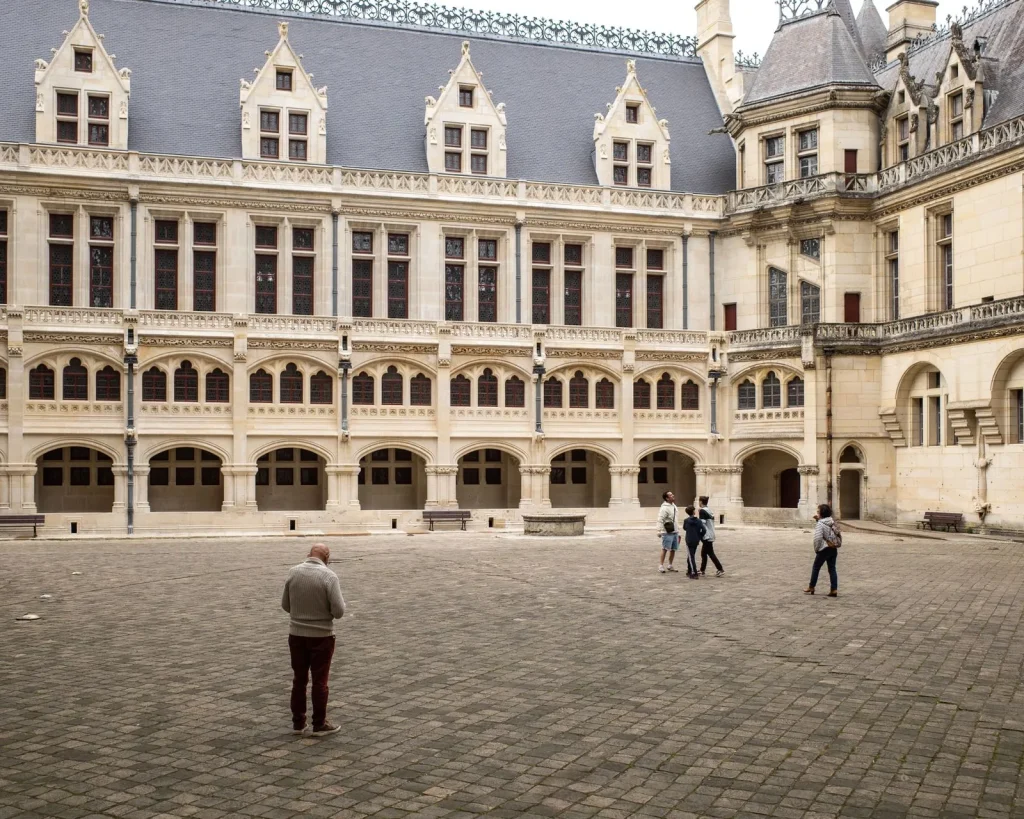
The Château du Creux is not a shooting club with a gravel car park and a “shooters’ reception” sign. It is a family home listed as a Historic Monument, lived in, handed down within the same line since the 16th century. The welcome therefore takes place where the family receives: in the courtyard, beneath the outbuildings remodelled in the 1770s by Nicolas-Martial Foacier. The cornices are at eye level, the wrought-iron gate is open. Nothing is staged.
The estate totals 1,100 hectares in one block. It is this detail that changes the mechanics of the day: no neighbour to humour, no peg cut short by a parcel boundary. We will come back to this.
The keeper’s briefing and the allocation of pegs
8:15. The keeper gathers the group in the courtyard. Five minutes, standing, map in hand.
He explains the two or three shooting units planned for the morning, the absolute safety zones, the permitted directions of fire depending on the configuration of the cover. It is not a lecture: the keeper knows each parcel by its working name, not by a cadastral number. He also knows the dogs present, how they work, the areas they tend to neglect.
The allocation of pegs takes the group into account. A novice will not be placed on a line peg, where the pheasants pass fast and high. An experienced shooter will not end up waiting on a flat corridor. It is a reading of the group that the keeper makes each morning and it changes from one Saturday to the next.
At 8:30, everyone is on their way to the first cover.
The morning: three hours in the cover
The November light at Le Creux is particular. It arrives from the side, almost horizontal at 9 am, and crosses the oak coppices in blades. You see vapours rising from the ferns. The grass is heavy. The dogs work close, noses low, and you hear them before you see them.
The morning is split into two or three drives depending on the size of the group and the layout of the land. Between each drive, you move on foot from one cover to the next. Ten minutes’ walk, sometimes twenty. No motorised shuttle unless specifically requested: the walking is part of the rhythm.
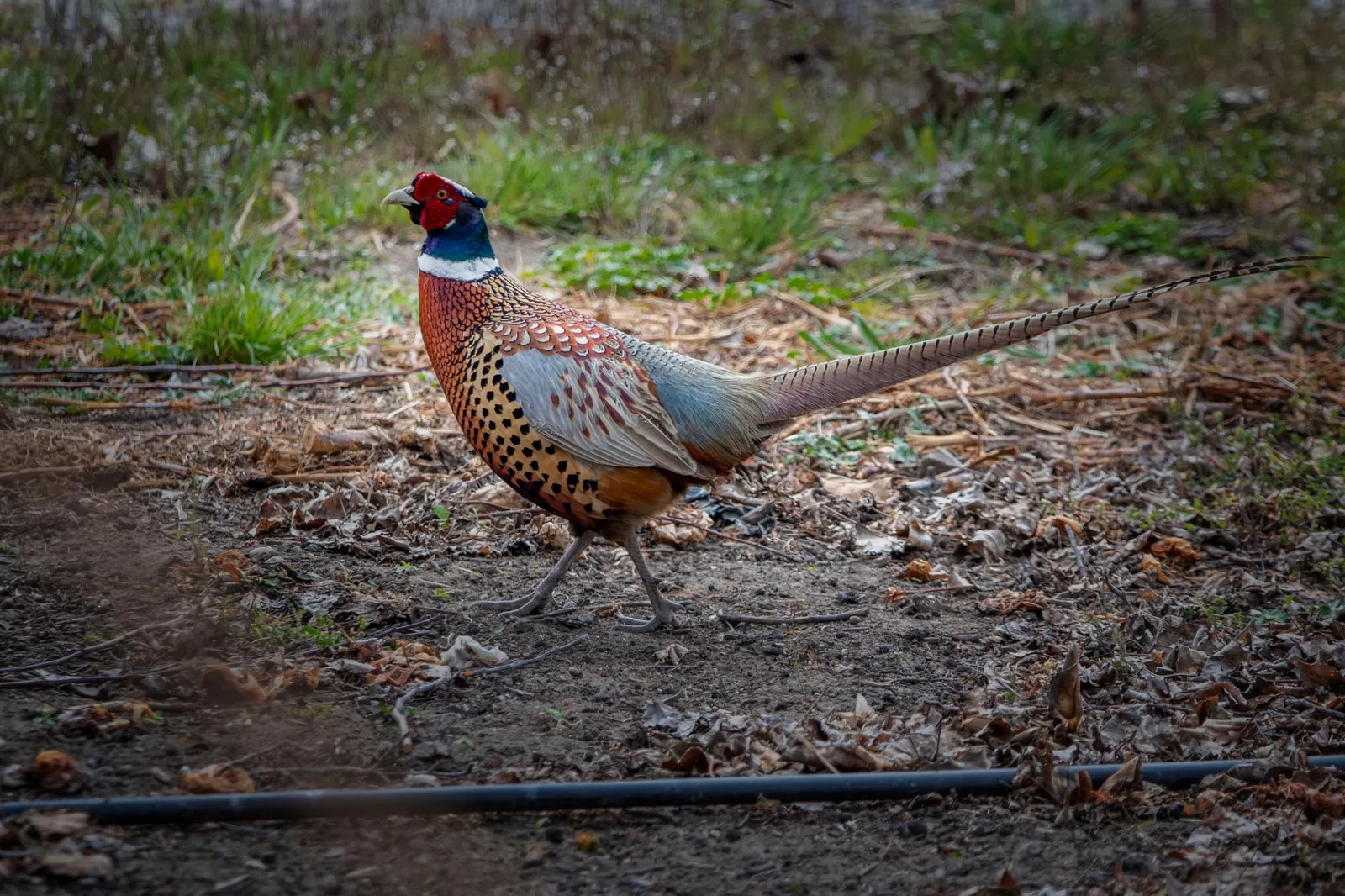
The pheasant reared and released on the estate is a shooting pheasant, not a park pheasant. The releases are planned so that the birds have dispersed and settled in the cover before the opening. A pheasant that runs on the ground before rising is not a management flaw: it is the sign that it has settled in.
What you shoot here, concretely: common pheasants, grey partridge depending on the year, hares depending on the sector. The morning’s bag depends on the group, the wind, the dogs. A morning with six guns can produce between twenty and forty head. No bag is guaranteed and it is a position we stand by: guaranteeing a bag is guaranteeing an industry, not a shoot.
Around 11:30, the keeper signals the end of the morning. The dogs are called back. The head are counted at the edge of the cover, in the cold grass.
The midday break on the estate
Back to the château for noon. The long table of the shooting dining room is laid. Not a standing buffet. A real table.
The midday lunch is simple: regional cold meats, cheeses, bread, estate wine or table wine depending on the option chosen. It lasts as long as it lasts, which is generally between an hour and an hour and a half. Some groups linger. Others are on their feet at 1:15 looking at the map of the next sector.
The château has neither a gourmet restaurant nor a hotel bar. It is a house. The shooting table is the one where the family receives. It is not a catering service: it is a lunch.
The afternoon and the final bag
The shoot resumes around 1:30 or 2 pm depending on the season and the mood of the group. The afternoon is often calmer than the morning. The birds have settled, the wind has blown, the cover has changed in appearance. The dogs are more tired and work differently.
Two drives, sometimes three if the weather allows. The light begins to change around 3:30 pm in November: it moves from white to yellow, then flattens over the ploughed fields. It is in this late-afternoon window that cock pheasants rise best, high, against the clear sky.
Around 4 pm, the keeper stops the shoot. The bag is laid out flat on the ground in front of the outbuildings, in the traditional way. The head are arranged by species. They are counted. They are photographed. It is a short, silent moment, often the most memorable of the day.
The game is then prepared according to custom: the head go back to the guns or stay for the evening meal, depending on prior agreement with the keeper.
The shooting dinner: closing the day as it should be
The shooting dinner begins around 7 pm. It is held in the château’s great hall, beneath the beams of the 18th-century ceiling. The fireplace has been lit since 6 pm: the stone dries quickly and the room is warm when the guns come in, still in their shooting clothes.
The menu is built around the estate’s game. Roast pheasant, civet depending on the year, seasonal vegetables. The cooking is done by an outside cook selected for his knowledge of Bourbonnais game, not for his ability to serve a hundred covers. Here, you are rarely more than twelve at table.
The smell of powder disappeared long ago. What remains is that of the wood fire and slow sauces. Voices rise, stories sharpen, missed shots improve. It is exactly this moment that is not organised: it happens or it does not, depending on the group.
Guns who wish to stay the night on site have access to the château’s rooms and suites. The Nicolay Suite, like the other accommodation available in the house, saves a night drive after a long day. A logistical detail, but not a trivial one.
To check available dates and request a quote suited to the size of your group, the Shooting page gathers the practical information and the keeper’s direct contact. Season dates close early: regular groups generally book before the end of the previous summer.
